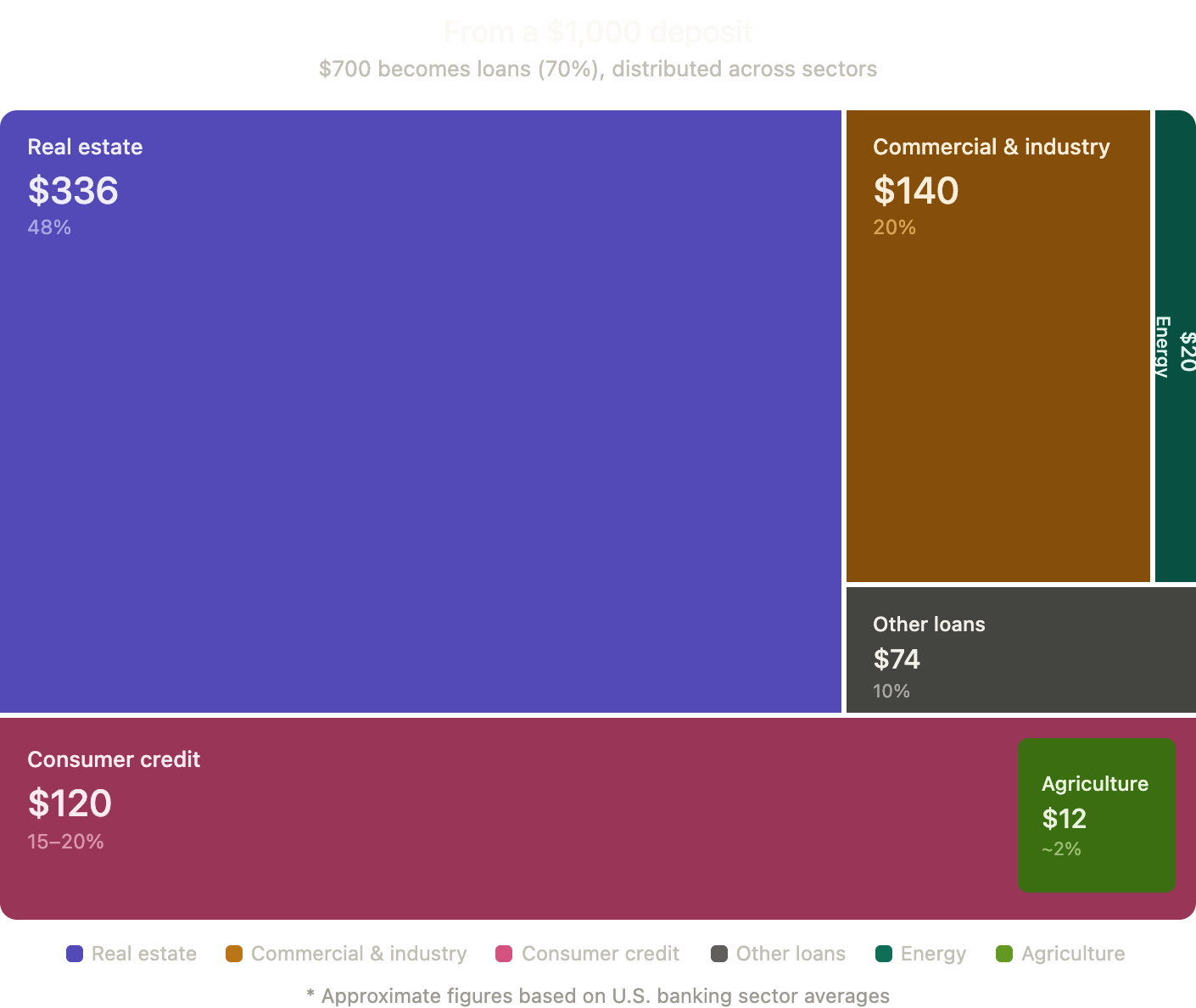
When someone deposits $1,000, nearly 70% of it becomes part of the lending that shapes the real economy:

Most people think a bank account is just storage. But the moment deposits arrive, they become active, flowing into loans that shape neighborhoods, infrastructure, opportunity, and even the environmental conditions people live with.
Banks decide where that money goes next. And those decisions quietly determine:
When someone deposits $1,000, nearly 70% of it becomes part of the lending that shapes the real economy:
Banks don’t just shape financial outcomes — they shape everyday life in communities. When deposits become loans, those loans turn into buildings, businesses, services, and public spaces.
Lending influences whether:
Strong community lending creates stability, lower costs, and resilience. Weak lending leaves aging buildings, fewer services, and rising household burdens.
The infrastructure we live with today — homes, power grids, transit, heating and cooling systems — was financed years ago. Banks influence what gets built next.
Deposits influence whether communities receive:
Good financing means reliable, efficient, low-cost systems. Poor financing locks communities into high-cost, high-carbon, unreliable infrastructure for decades.
Credit access determines who can participate in the transition to a cleaner, cheaper, more resilient future.
It shapes:
Communities with limited credit access face higher costs, older systems, and fewer choices. Where deposits flow determines who benefits from modern infrastructure — and who is left behind.
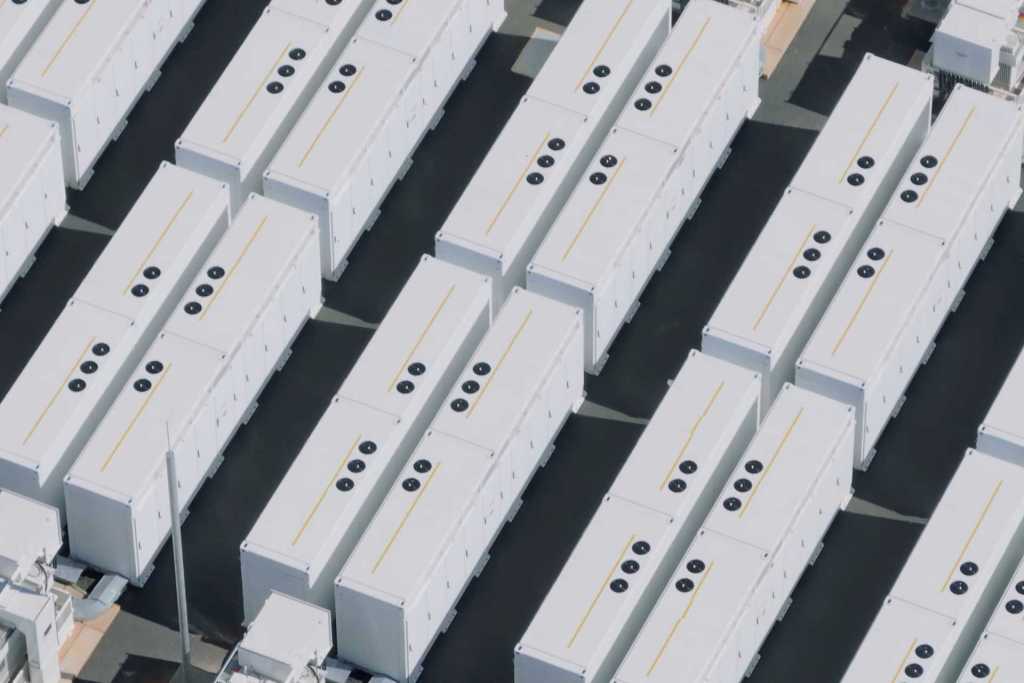
Financed by Climate First Bank (Florida): Provided funding for two utility-scale battery energy storage systems (total 20 MW power, 80 MWh storage) along Virginia’s Eastern Shore . The project boosts local grid resilience and supports Virginia’s Clean Economy Act goal of 100% clean electricity by 2050 .
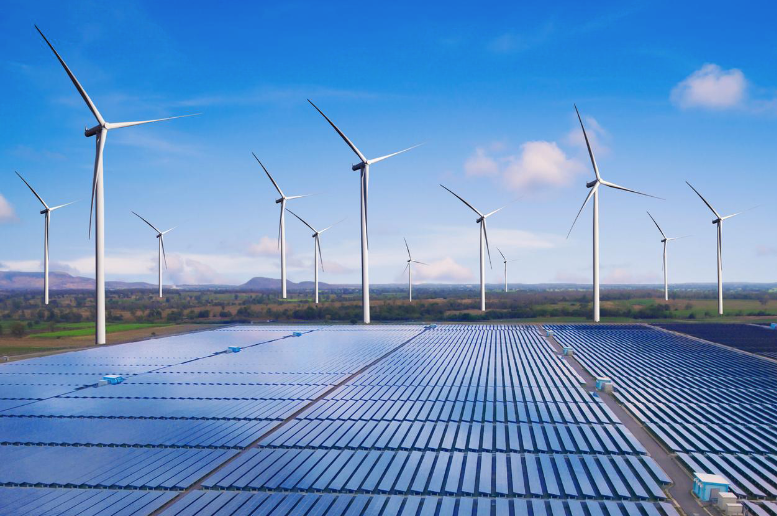
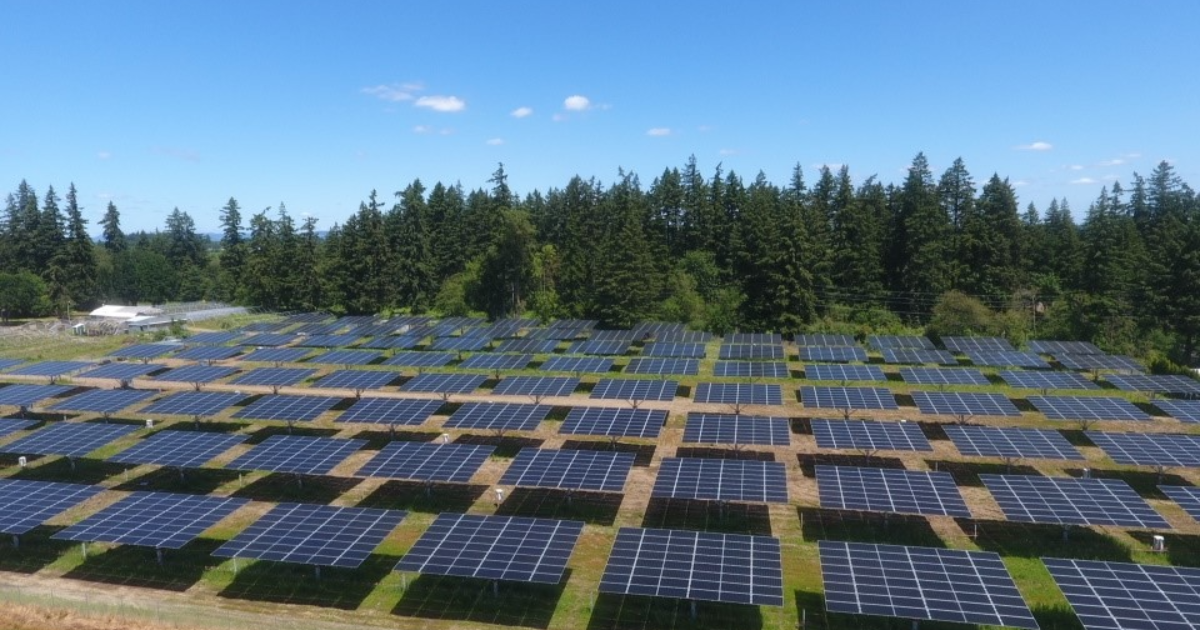
Financed by Beneficial State Bank: Supplied a permanent loan to complete a 144-tracker, 3.6 MW community solar farm . The installation provides low-cost solar power to the community – 30% of its output is reserved for low- to moderate-income households at reduced rates , making clean energy accessible to underserved families.
You don’t have to switch banks today. The first step is simply seeing what your bank actually does with your money.
Once you understand where your deposits go, choosing what they build next becomes much easier.
Start small:
That’s why Bank for Good exists — to make the invisible visible and give you the clarity, confidence, and control to choose what your money builds.
That’s huge. The more institutions make this promise, and the more people decide to Bank for Good, the closer we are to containing and reversing the climate crisis.
Good financial institutions—get this—actually care about their customers and communities while still offering a range of financial products. Some have branches where you live and tellers who will know your name; others were built entirely online and have top-notch mobile apps and websites.
Many are Minority Depository Institutions, or MDIs, which are owned by, led by, or dedicated to serving people of color. Some are Community Development Financial Institutions (CDFIs): they’re federally recognized and regulated as serving communities that have been shut out of many large financial institutions. And some are members of networks dedicated to doing good while doing business, like B-Corps or the Global Alliance for Banking on Values (GABV). Whatever you’re looking for from your financial institution, you can find it here.
When you start an account with a Bank for Good participating institution, you’re joining a movement of people who are demanding a banking system that puts people before profits. You’re participating in a moment where powerful actors that once seemed invincible are buckling under the power of everyday people. You’re sending a message: